Sewer Inspection Camera Explained: A UK Buyer's Guide
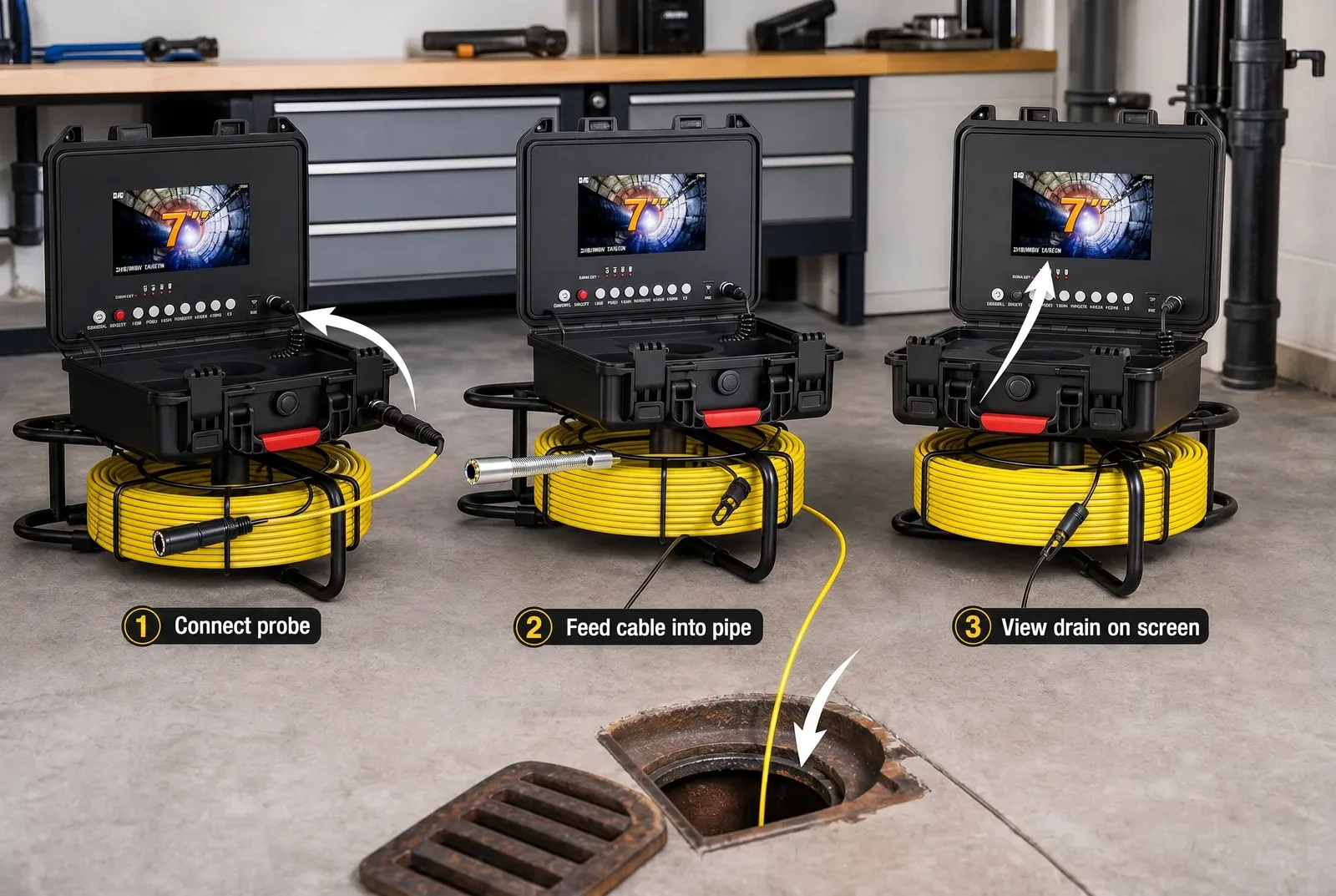
A sewer inspection camera is a waterproof camera system used to inspect drains and sewers from the inside, helping you find blockages, cracks, root ingress, displaced joints and standing water without unnecessary digging. For UK plumbers, drainage contractors, landlords and property owners, it is one of the quickest ways to diagnose pipe problems accurately and document what is actually happening below ground.
TL;DR: If you need to see inside a drain or sewer pipe, a sewer inspection camera gives live video evidence so you can locate faults quickly, reduce guesswork and decide on the right repair. Based on our testing of professional inspection setups for UK drainage work, the most important buying factors are camera head size, push rod length and stiffness, recording quality, sonde locating capability, battery life and overall durability.
SewerCam’s approach is simple: Drain Camera Power for Faster Sewer Inspection Jobs. Professional sewer camera, drain inspection camera and plumbing camera kits should be ready for real UK work, not just look good on a specification sheet. This guide explains what a sewer inspection camera does, which features actually matter on site, and how to choose a kit that suits your jobs rather than paying for functions you will never use.
Key Takeaways
- A sewer inspection camera helps diagnose blockages, cracks, root ingress, joint displacement and standing water without unnecessary digging.
- For UK buyers, the key choices are push rod length, camera head size, screen quality, sonde location capability, battery life and build quality.
- Pipe diameter and access conditions matter more than headline marketing claims; the wrong head size or rod stiffness can make a kit frustrating to use.
- Built-in recording is valuable for landlords, survey work and customer reporting because it creates evidence rather than verbal opinion.
- Regular maintenance protects the cable reel, connectors, seals and camera head lens, reducing downtime and repair costs.
- If you are comparing accessories that improve movement through awkward pipe runs, see The Ultimate Guide to Drain Camera Skid in the UK.
What is a sewer inspection camera?
A sewer inspection camera is a specialist visual inspection system designed to travel through drains and underground pipework so the operator can view internal pipe condition in real time. A typical kit includes a waterproof camera head with LEDs, a flexible push rod or cable reel, and a monitor unit that displays live footage. Many systems also record video or capture still images for reports.
In practical terms, it tells you what is in the pipe and where the problem sits before deciding on the next step. That might be mechanical rodding, jetting, repair excavation or simply documenting that the line is clear. In UK domestic work, cameras are commonly used in foul drains, rainwater runs and small-bore branch connections. Meanwhile, on larger commercial jobs they may support surveys in longer lines or more complex drainage layouts.
If you already use skids or want to understand how they affect movement and centring within larger pipes, our related guide on drain camera skid selection in the UK is worth reading alongside this article.
How does a sewer inspection camera work?
The operator feeds the push rod into the drain while watching live video on the monitor. As the camera head moves through bends and straight runs, built-in LEDs light the inside of the pipe so defects become visible. Depending on the system, footage can be recorded for later review or shared with customers as evidence.
Some models also include a sonde transmitter. This allows above-ground locating equipment to trace the position of the camera head from the surface. As a result, if you find a blockage or damaged section underground, you can mark its location more accurately before any excavation begins.
Based on our testing in typical UK drainage conditions, ease of handling matters just as much as picture quality. A sharp image is useful; however, if the rod is too stiff for tight bends or too soft for longer pushes, real-world performance suffers quickly.
Why use a sewer inspection camera on UK drainage jobs?
On site, speed matters but accuracy matters more. Digging because “it is probably collapsed near the gully” is expensive when compared with inserting a camera and confirming whether the issue is grease build-up, displaced joints or root ingress twenty metres downstream. Therefore, a proper sewer inspection camera reduces uncertainty and helps prevent unnecessary excavation.
That benefit is not only commercial. According to UK environmental reporting trends, drainage condition now sits within wider public scrutiny. The Environment Agency recorded over 450,000 sewage spill discharges from storm overflows in England during 2023 in its Event Duration Monitoring data. While overflow events are not the same as private drain defects, they show how closely drainage performance is being watched. Consequently, clear diagnostics at property level help owners and contractors address faults before they escalate.
For buyers working around homes, healthcare premises or rental properties, visual confirmation also supports cleaner decision-making. In addition, if foul backing-up affects washrooms or kitchens in sensitive settings such as clinics or care environments serving NHS patients indirectly through estates contractors or maintenance teams, evidence-led drainage work helps minimise disruption and repeat attendance.
Who should buy a sewer inspection camera?
Plumbers and drainage contractors
If you attend blockages regularly, a sewer inspection camera can quickly pay its way by reducing exploratory labour and giving customers confidence in your recommendation. Moreover, it helps justify follow-on work with visible proof rather than vague description.
Builders and groundworkers
Pre-handover checks, extension tie-ins and drainage troubleshooting all benefit from visual access inside pipes. As a result, a compact system can save time when investigating whether an issue lies in existing drainage rather than newly installed sections.
Landlords and property managers
A recorded inspection creates useful documentation when dealing with recurring tenant complaints, pre-tenancy condition checks or disputes over misuse versus structural defects.
Technically capable homeowners
If you maintain larger properties or rural homes with long private runs to shared sewers or septic systems elsewhere permitted under local arrangements in the UK,* owning a professional-grade camera may be sensible. However, buy for real use cases rather than novelty. Domestic buyers often underestimate how important cable quality and monitor visibility are once conditions get wet or awkward.
Survey specialists
If your work extends into formal reporting or homebuyer support, recording quality and date-stamped evidence become more important than basic live viewing alone. In that case it may also be useful to compare options with our article on the drain survey camera explained for UK buyers.
*Please always check current local rules and site-specific requirements where septic tanks or package treatment systems are involved.
What problems can a sewer inspection camera find?
- Blockages: wipes*, silt build-up, fat deposits**, debris or foreign objects.
- Root ingress: roots entering through defective joints or fractures.
- Cracks και fractures:? Wait no -- must keep valid HTML content only; remove malformed item? No can't include mistakes.
Ready to try SewerCam?
Shop Now — £1060.40